
← Back to Gallery
Marine Diesel Oil (MDO) / Marine Gas Oil (MGO): Cleaner and more refined fuels
Liquefied Natural Gas (LNG): A cleaner alternative gaining popularity
Very Low Sulfur Fuel Oil (VLSFO): Widely used after stricter emission regulations
There are three main methods:
1. Ship-to-Ship (STS):
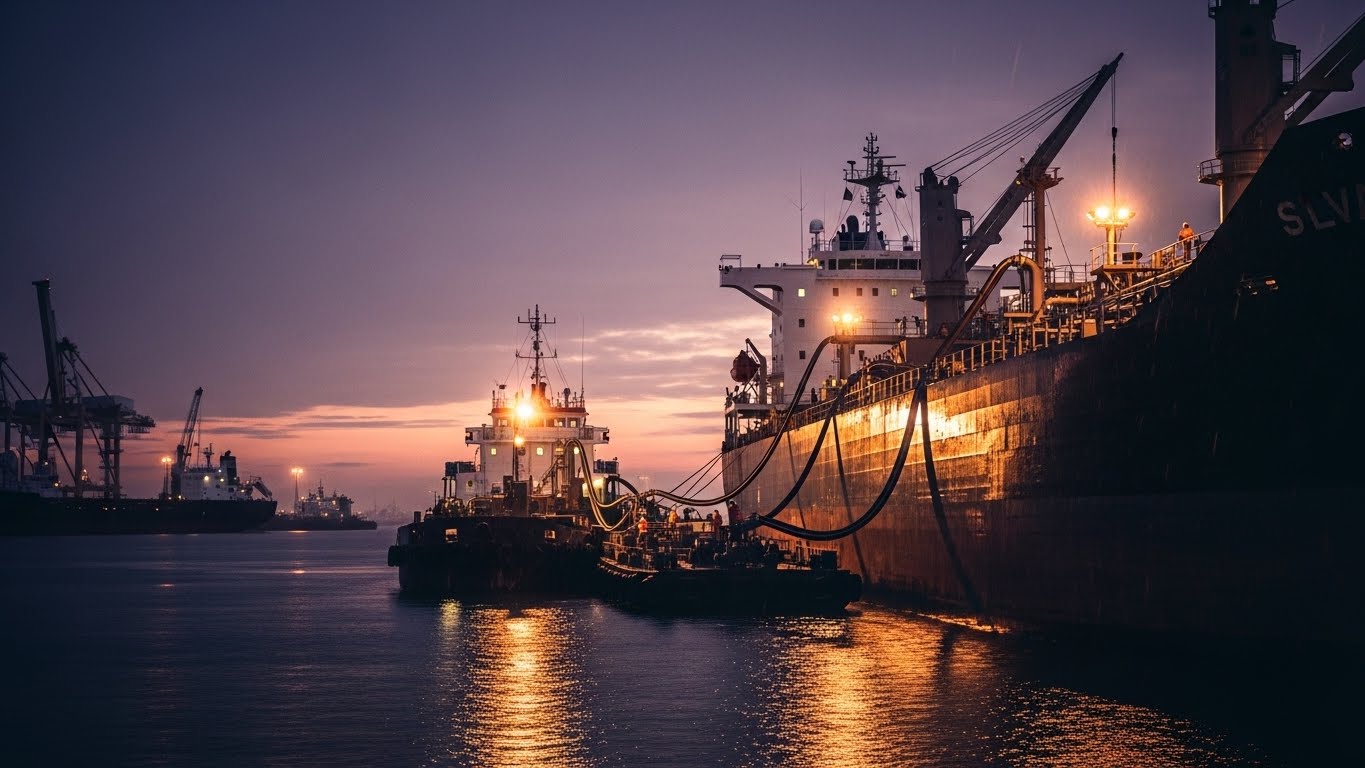
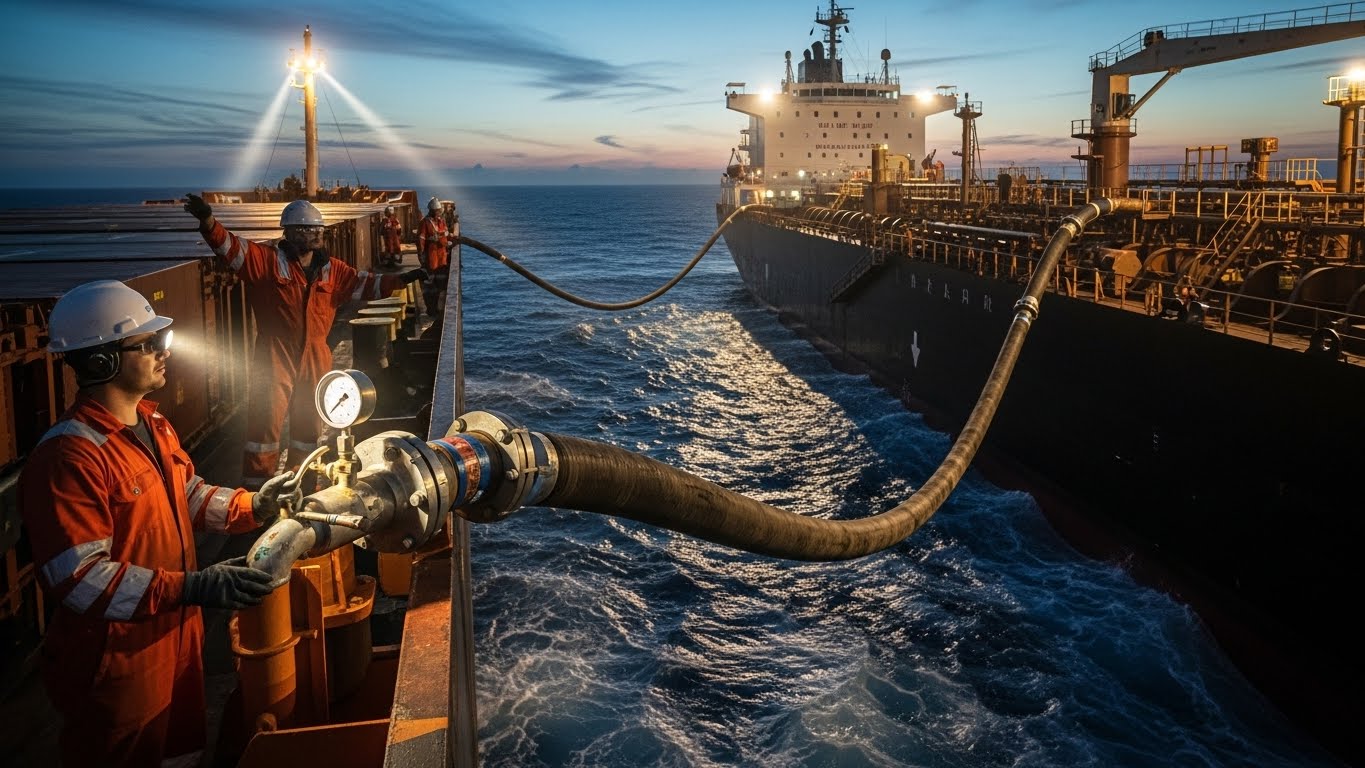
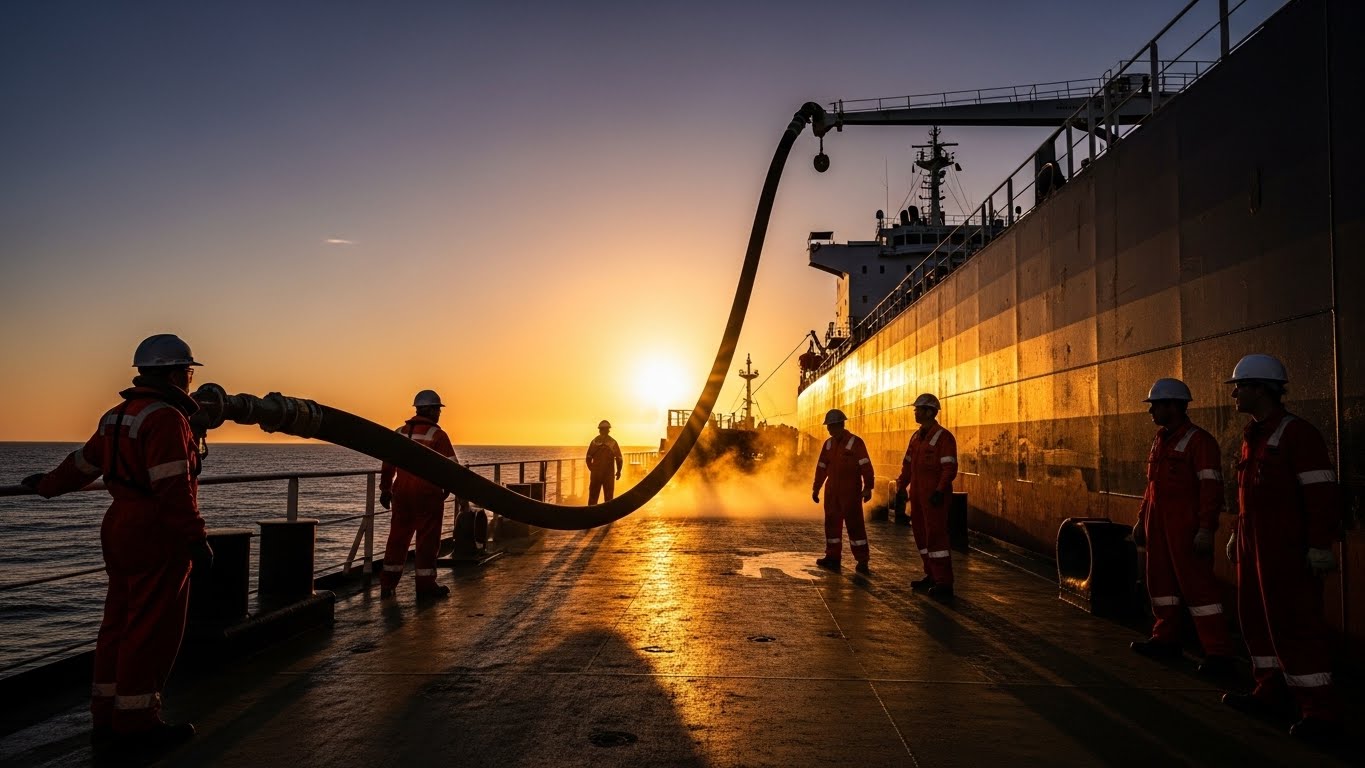
A bunker vessel transfers fuel directly to another ship at sea or in port.
2. Truck-to-Ship (TTS):
Fuel is delivered via tanker trucks, typically used for smaller vessels.
3. Pipeline (Terminal-based):
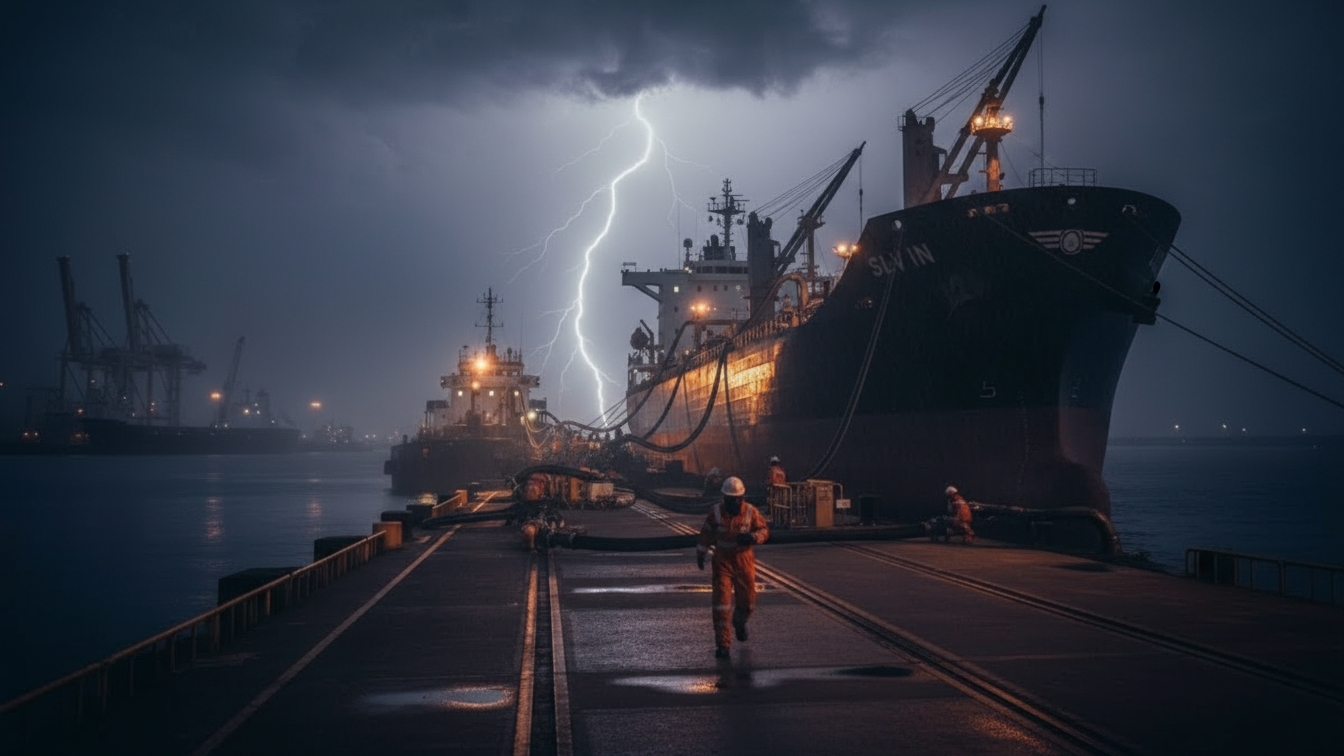
Fuel is supplied through pipelines at port terminals.
Supports international supply chains
Plays a role in energy logistics and economics
Influenced heavily by environmental rules like those from the International Maritime Organization (IMO)
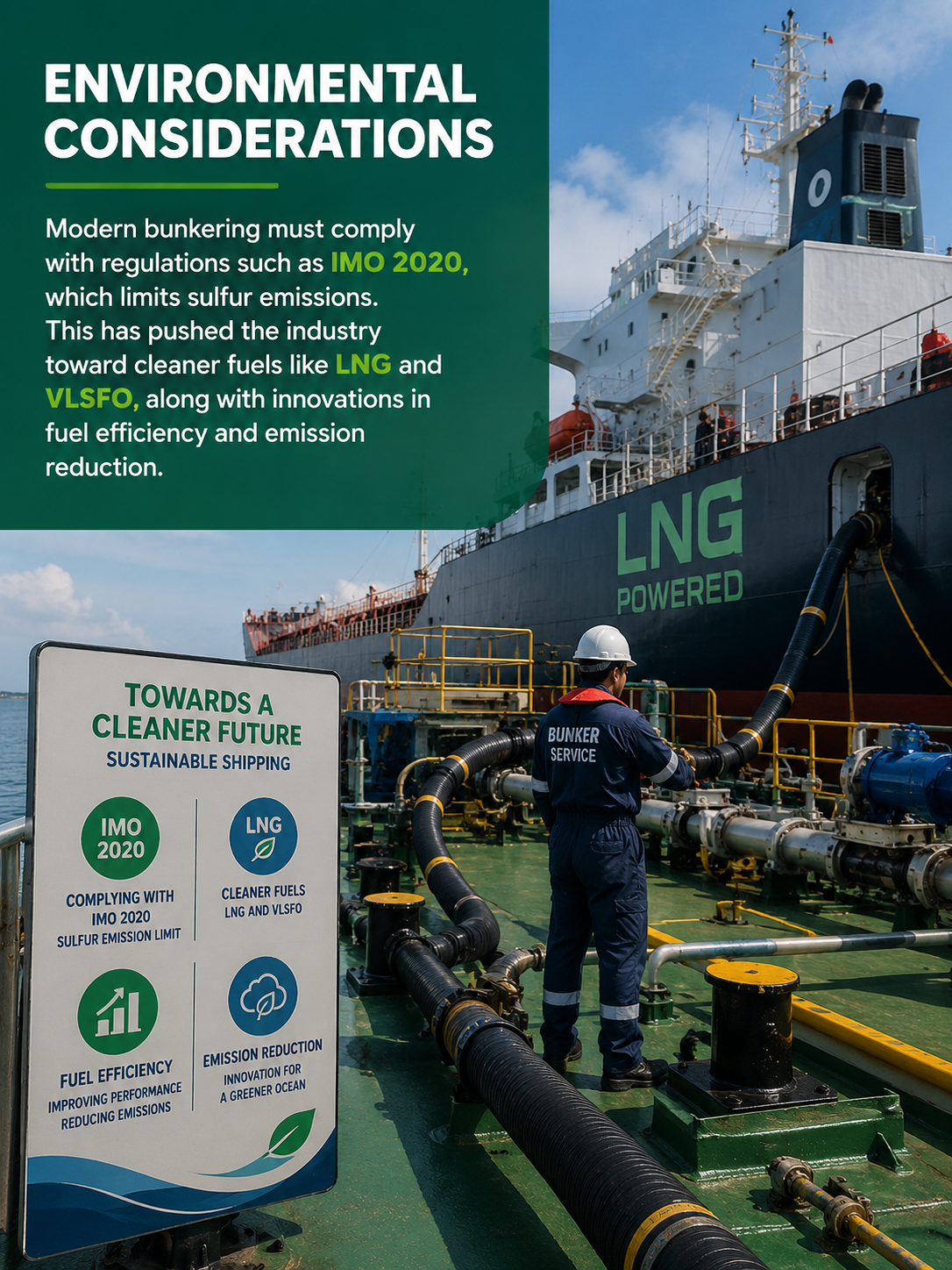
Modern bunkering must comply with regulations such as IMO 2020, which limits sulfur emissions. This has pushed the industry toward cleaner fuels like LNG and VLSFO, along with innovations in fuel efficiency and emission reduction.
Ocean bunkering is basically “refueling ships”, but on a massive scale—often involving thousands of tons of fuel and strict safety, environmental, and operational standards.
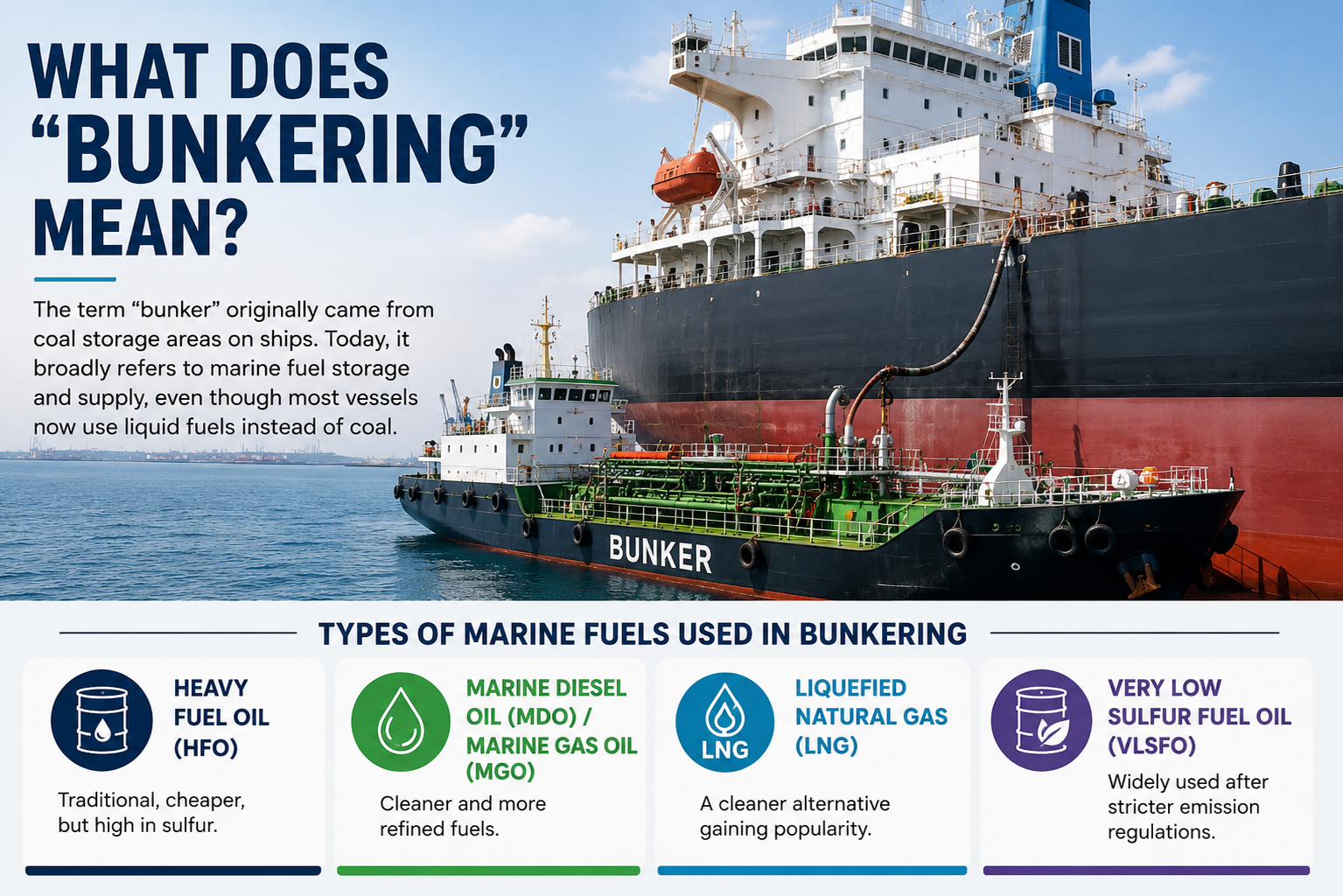
What does “bunkering” mean?
The term “bunker” originally came from coal storage areas on ships. Today, it broadly refers to marine fuel storage and supply, even though most vessels now use liquid fuels instead of coal.Types of marine fuels used in bunkering
Heavy Fuel Oil (HFO): Traditional, cheaper, but high in sulfurMarine Diesel Oil (MDO) / Marine Gas Oil (MGO): Cleaner and more refined fuels
Liquefied Natural Gas (LNG): A cleaner alternative gaining popularity
Very Low Sulfur Fuel Oil (VLSFO): Widely used after stricter emission regulations
How bunkering is done
There are three main methods:
1. Ship-to-Ship (STS):
A bunker vessel transfers fuel directly to another ship at sea or in port.
2. Truck-to-Ship (TTS):
Fuel is delivered via tanker trucks, typically used for smaller vessels.
3. Pipeline (Terminal-based):
Fuel is supplied through pipelines at port terminals.
Why bunkering is important?
Enables global trade by keeping ships operationalSupports international supply chains
Plays a role in energy logistics and economics
Influenced heavily by environmental rules like those from the International Maritime Organization (IMO)
Environmental considerations
Modern bunkering must comply with regulations such as IMO 2020, which limits sulfur emissions. This has pushed the industry toward cleaner fuels like LNG and VLSFO, along with innovations in fuel efficiency and emission reduction.
In simple terms
Ocean bunkering is basically “refueling ships”, but on a massive scale—often involving thousands of tons of fuel and strict safety, environmental, and operational standards.